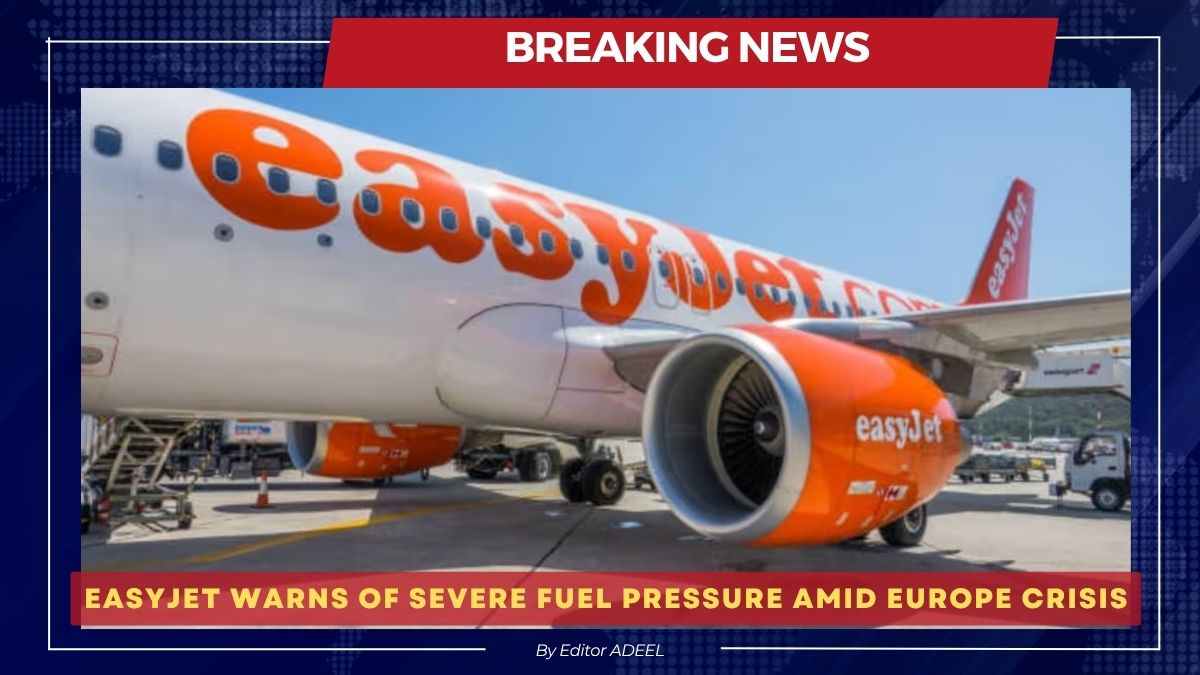

The increasing fuel price and the possible strain on supplies are concerns raised by low-cost airline easyJet as the wider jet fuel crisis starts to affect the airline industry in Europe. Although the airline has assured the passengers that its operations are not under threat of shortage immediately, the situation is still volatile with the global geopolitical tensions.
This problem is mostly because Iran is in the midst of a conflict that has disrupted global oil and led to a high surge in the prices of jet fuel. The shutdown of major shipping routes, including the Strait of Hormuz that transports much of the world’s oil, has added to the fear of supply shortages.
In the case of EasyJet, the fuel bills have already gone up by about 25 million pounds in one month, and this is putting a strain on the financial performance. The airline is now looking at a pre-tax loss of between 540 and 560 million in the first half of the financial year, much higher than last year.
Nevertheless, the company has emphasised the fact that it is currently adequately stocked with fuel reserves, including, in part, hedging mechanisms that have ensured about 70 per cent of its fuel requirements in the near future. According to the executives, there are no immediate fears of fuel exhaustion, at least in the short term.
But the bigger industry picture is not so bright. The International Energy Agency has cautioned that there might be as little as six weeks of jet fuel in Europe in case there are further supply disruptions. Some airlines have already reduced flights or grounded planes, and analysts suggest that the situation might deteriorate, further reducing capacity.
The effect is already starting to manifest itself to the passengers. EasyJet has observed a change in the behaviour of booking, whereby travellers are postponing purchases owing to uncertainties. Meanwhile, ticket prices will probably increase due to airlines’ transfer of higher fuel prices.
Experts in the industry caution that in case the crisis continues into the high season of summer travel, travellers would be charged with increased fares, limited choice of flights and disruption. European governments are currently striving to find alternative forms of fuel and stabilise the market.
To conclude, although EasyJet is not facing a direct fuel shortage at the moment, it is operating in a more tense environment. Rising prices and a lack of predictability in demand, combined with weak global supply chains, imply that the situation may change dramatically in the next few weeks.