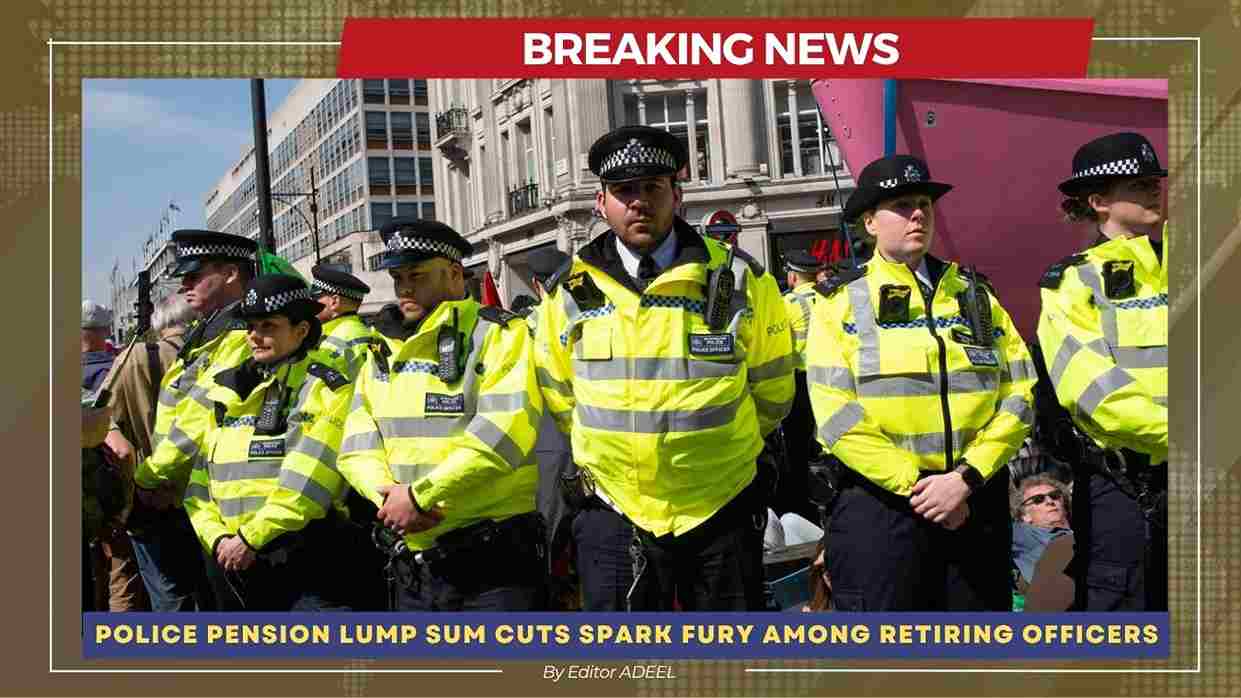

Police officers around England and Wales are angry about the sudden changes to pension rules, which have seen some officers see their payouts at retirement reduced by thousands of pounds, and the move is dubbed an “overnight cut” to hard-earned benefits. The changes mainly impact officers who are due to retire under the 1987 Police Pension Scheme, raising the question of fairness and lack of information.
The issue is over updated “commutation factors” that are used to determine the size of the lump-sum that officers can take up-front instead of receiving a portion of their annual pension, with the portion taken before retirement being tax-free. The new changes will allow officers who retired in late May 2026 to receive nearly five per cent less lump sum than those who retired just a few days earlier, though contributing to the pension similarly throughout their careers.
Changes were in line with a move by the UK Treasury to raise the SCAPE discount rate, a financial assumption used to establish the cost of public sector pensions. The change comes as part of a pension “refresher” which takes account of new long-term economic forecasts, according to officials, and is to be applied to all unfunded public service pension schemes, including those for police, NHS, teaching and civil service pensions.
The new calculations do not lower pensioners’ income that has already been accrued, and do not impact pensions already paid out, according to pension guidance from policing bodies. Rather, it’s about the amount of cash that officers can get up-front if they elect to take a portion of their annual pension as a lump-sum payout.
But police officials have slammed the pace of the transformation. The Police Federation of England and Wales said that many officers approaching retirement whose pension forecasts were made previously may have made financial decisions, such as mortgage arrangements or planning for their retirement, based on those figures.
Reductions up to a few thousand pounds have been reported in some cases. Under the new formula, an officer who had been expecting to be paid a lump sum of over £174,000 is said to be receiving about £166,000.
Police Federation officials allege the changes were made without adequate notice and want advice both legally and actuarially on whether officers who have been given illustrations earlier will have cause for action. The change was called by the Federation a “financial hit” on “long-serving officers who are planning to leave the force.
The National Police Chiefs’ Council (NPCC) has been trying to calm fears among officers, saying that the changes would not affect their accumulated pension benefits, but only have an effect on some pension calculations related to retirement choice. Advice on the implications for those who are affected has been provided in guidance documents.
The decision is frustrating to officers near retirement, with pressure building on the government to explain the decision and look at providing transitional protections for officers who find themselves caught by the new rules.
Pension changes for police officers have sparked dismay at the police officers’ union. After the Treasury change, retired officers can expect to see a lower pension lump sum payout. Retired officers will see a lower lump sum after the Treasury change.